Showing posts with label Culture. Show all posts

13.9.12

The New Trend among Chinese Young Guys---Lomography


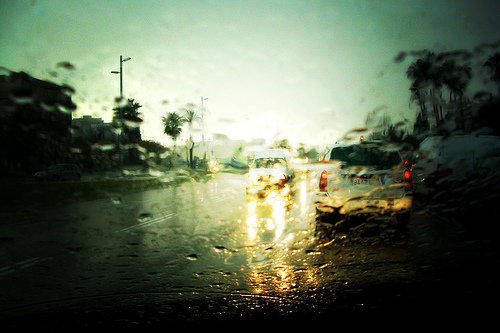
Lomography is a community of Lomographic photographers who advocate creative and experimental film photography. The name is inspired by the former state-run optics manufacturerLOMO PLC of Saint Petersburg, Russia that created and produced the 35 mm LOMO LC-A Compact Automat camera, now the centerpiece of the Lomographic movement. This camera was loosely based upon the Cosina CX-1 and introduced in the early 1980s.


Lomography also represents the commercial trademark of Lomographische AG, an Austrian company that produces cameras and other tools that cater to the needs of this photographic movement. The society is headquartered in Vienna, Austria, where most of its events are organised.
In 1991, Viennese students Matthias Fiegl and Wolfgang Stranzinger discovered the Lomo LC-A and were "charmed by the unique, colorful, and sometimes blurry" images that the camera produced. The Lomographic Society International was subsequently founded in 1992. After a series of international art exhibitions culminating in exhibitions in New York City and Moscow. Lomography signed an exclusive distribution agreement with LOMO PLC in 1995 — thereby becoming the sole distributor of all Lomo LC-A cameras outside of the former Soviet Union. The new company reached an agreement with the deputy mayor of St Petersburg, the future Russian Prime Minister and President, Vladimir Putin, to receive a tax break in order to keep the LOMO factory in the city open.[Since the introduction of the original Lomo LC-A, Lomography has produced and marketed an entire line of their own analog cameras. Most Lomographic cameras are designed to produce photographic effects such as "oversaturated colors, extreme optical distortions, rainbow-colored subjects, off-kilter exposure, blurring and alternative film processing, all things usually considered bad in photography." For example, the Lomography Fisheye camera features a built-in wideangle lens, and shoots fisheye-distorted photos. In 2005, production of the original Lomo LC-A was discontinued. Its replacement, the Lomo LC-A+, was introduced in 2006. The new camera, made in China rather than Russia, featured the original Russian lens manufactured by LOMO PLC. This changed as of mid-2007 with the lens now made in China as well.


Similar to Eastman Kodak's concept of the "Kodak moment", the philosophy behind Lomography is summarized in its motto, "Don’t Think, Just Shoot." This motto is accompanied by The Ten Golden Rules which are supposed to encourage spontaneity, odd angles, and taking photos anywhere, while minimizing considerations of formal technique.Typical Lomography cameras are deliberately low-fidelity and constructed to make sure their mechanics are not too technical. Some cameras make use of multiple lenses and rainbow-colored flashes, or exhibit extreme optical distortions and even light leaks.


All the photos are taken by Chinese photographers.
                   http://www.iebyte.com/view-10235.html

12.9.12

CHINESE CHEONGSAM (QIPAO)

The cheongsam is a female dress with distinctive Chinese features and enjoys a growing popularity in the international world of high fashion.
The name "cheongsam," meaning simply "long dress," entered the English vocabulary from the dialect of China's Guangdong Province (Cantonese). In other parts of the country including Beijing, however, it is known as "qipao", which has a history behind it.woman wearing cheongsam
When the early Manchu rulers came to China proper, they organized certain people, mainly Manchus, into "banners" (qi) and called them "banner people" (qiren), which then became loosely the name of all Manchus. The Manchu women wore normally a one-piece dress which, likewise, came to be called "qipao" or "banner dress." Although the 1911 Revolution toppled the rule of the Qing (Manchu) Dynasty, the female dress survived the political change and, with later improvements, has become the traditional dress for Chinese women.
Easy to slip on and comfortable to wear, the cheongsam fits well the female Chinese figure. Its neck is high, collar lady in cheongsamclosed, and its sleeves may be either short, medium or full length, depending on season and taste. The dress is buttoned on the right side, with a loose chest, a fitting waist, and slits up from the sides, all of which combine to set off the beauty of the female shape.
The cheongsam is not too complicated to make. Nor does it call for too much material, for there are no accessories like belts, scarves, sashes or frills to go with it.
Another beauty of the cheongsam is that, made of different materials and to varying lengths, they can be worn either on casual or formal occasions. In either case, it creates an impression of simple and quiet charm, elegance and neatness. No wonder it is so much liked by women not only of China but of foreign countries as well.


This is a fragment of the film‘The Flowers of War’-directed by Zhang Yimou.